Hey there! As a supplier of Disc Vacuum Filters, I'm super stoked to dive into the nitty - gritty of how these amazing machines work.
Let's start with the basics. A Disc Vacuum Filter is a piece of equipment that's widely used in various industries, from mining to chemical processing. Its main job is to separate solids from liquids in a slurry mixture. Sounds simple, right? Well, there's a whole lot going on behind the scenes.
The Main Components
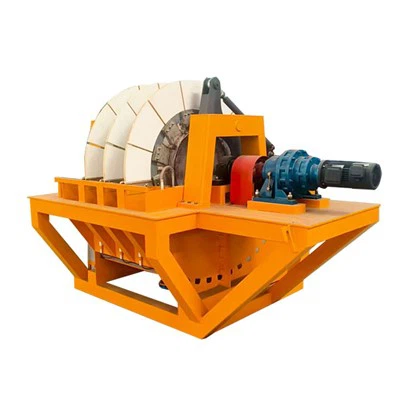
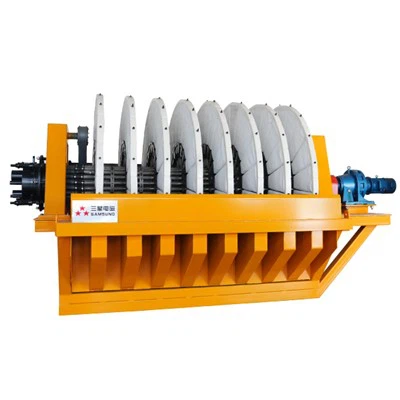
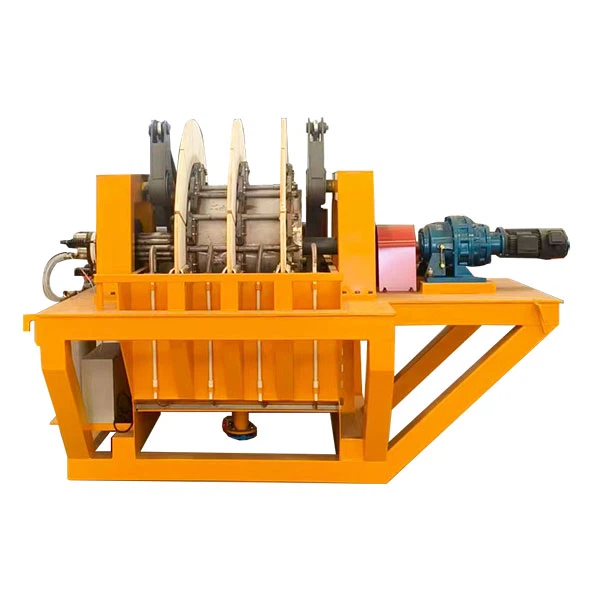
First off, we need to understand the key parts of a Disc Vacuum Filter. The most prominent part is, of course, the disc. The disc is usually made up of multiple sectors, and it rotates slowly in a tank filled with the slurry. Each sector of the disc has a filter medium, which can be a cloth or a membrane. This filter medium is what allows the liquid to pass through while trapping the solid particles.
There's also a vacuum system. This is crucial because it creates the pressure difference that drives the filtration process. The vacuum pump is connected to the disc through a series of pipes and valves. When the pump is turned on, it sucks the air out of the disc sectors, creating a negative pressure inside.
Another important component is the discharge mechanism. Once the solid particles have been collected on the filter medium, they need to be removed. There are different ways to do this, like using a scraper or a blow - back system.
How the Filtration Process Works
Okay, so now that we know the main parts, let's walk through the actual working process.
Slurry Feed
The process starts with the slurry being fed into the tank where the disc is located. The disc rotates slowly through the slurry. As it does, the vacuum system starts to work. The negative pressure created by the vacuum pump causes the liquid in the slurry to be drawn through the filter medium on the disc sectors.
For example, in a mining operation, the slurry might contain valuable minerals and water. As the disc rotates through the slurry, the water is pulled through the filter cloth, leaving the minerals behind on the surface of the cloth.
Filtration Zone
As the disc continues to rotate, it enters the filtration zone. In this zone, the vacuum is maintained, and more liquid is removed from the slurry. The solid particles build up on the filter medium, forming a cake. The thickness of the cake depends on various factors, such as the vacuum level, the rotation speed of the disc, and the properties of the slurry.
The longer the disc stays in the filtration zone, the thicker the cake will be. But there's a balance to strike. If the cake gets too thick, it can become difficult to remove, and it might also reduce the efficiency of the filtration process.
Washing Zone (Optional)
In some cases, there's a washing zone in the process. This is especially important when the solids need to be further purified. In the washing zone, clean water is sprayed onto the cake. The vacuum then draws the wash water through the cake, removing any remaining impurities.
For instance, in a chemical processing plant, the solid product might have some residual chemicals that need to be washed off. The washing zone ensures that the final product meets the required purity standards.
Drying Zone
After the washing (if applicable), the disc moves into the drying zone. Here, the vacuum continues to draw air through the cake, removing any remaining moisture. This helps to reduce the moisture content of the solid product, making it easier to handle and transport.
The drying efficiency depends on the vacuum level and the time the cake spends in the drying zone. A higher vacuum level and a longer drying time generally result in a drier cake.
Discharge Zone
Finally, the disc reaches the discharge zone. This is where the solid cake is removed from the filter medium. As I mentioned earlier, there are different ways to do this. A common method is to use a scraper. The scraper gently removes the cake from the surface of the filter medium, and it falls into a collection hopper.
Some Disc Vacuum Filters also use a blow - back system. In this system, a burst of air is used to dislodge the cake from the filter medium. This can be more effective for certain types of cakes that are difficult to remove with a scraper.
Different Types of Disc Vacuum Filters
There are a few different types of Disc Vacuum Filters, each with its own unique features.
Ceramic Disc Filter
The Ceramic Disc Filter uses a ceramic filter medium. Ceramics have some great properties for filtration. They are highly porous, which allows for efficient liquid flow. They are also very resistant to wear and corrosion, making them suitable for harsh environments.
In a Ceramic Disc Filter, the ceramic discs are submerged in the slurry, and the vacuum draws the liquid through the ceramic pores. The solid particles are retained on the surface of the ceramic discs.
Rotary Disc Filter
The Rotary Disc Filter is a more general type of disc filter. It can use different types of filter media, such as cloth or membranes. The disc rotates continuously, and the filtration process occurs as described above.
This type of filter is versatile and can be used in a wide range of applications, from wastewater treatment to food processing.
Rotary Vacuum Disc Filter
The Rotary Vacuum Disc Filter is similar to the Rotary Disc Filter, but it emphasizes the use of a vacuum to drive the filtration process. The vacuum system in a Rotary Vacuum Disc Filter is carefully designed to ensure optimal performance.
It can handle large volumes of slurry and is often used in industrial applications where high - throughput filtration is required.
Advantages of Using a Disc Vacuum Filter
There are several reasons why Disc Vacuum Filters are so popular in different industries.
First of all, they are very efficient. They can separate solids from liquids quickly and effectively, even for difficult - to - filter slurries. The continuous rotation of the disc allows for a continuous filtration process, which means high productivity.
Secondly, they are relatively easy to operate and maintain. The components are designed to be durable, and the control systems are user - friendly. This reduces the downtime and the cost of operation.
Another advantage is that they can be customized. Depending on the specific requirements of the application, different filter media, disc sizes, and operating parameters can be selected. This makes them suitable for a wide variety of industries and processes.
Why Choose Our Disc Vacuum Filters
As a supplier, we take pride in offering high - quality Disc Vacuum Filters. Our filters are designed with the latest technology and are built to last. We have a team of experts who can provide you with the best advice on which type of filter is suitable for your specific needs.
We also offer excellent after - sales service. If you have any problems with your filter, our technicians will be there to help you out as soon as possible. And we constantly update our products to keep up with the latest industry trends.

If you're in the market for a Disc Vacuum Filter, whether it's for a small - scale operation or a large industrial plant, we'd love to talk to you. Our filters can help you improve your filtration efficiency, reduce your operating costs, and increase your productivity. So, don't hesitate to reach out to us for a consultation. We're here to make your filtration process as smooth as possible.
References
- "Filtration Handbook" by A. S. Tetlow
- "Industrial Filtration Technology" by T. H. Metzger