Hey there! As a supplier of Rotary Vacuum Disc Filters, I often get asked a bunch of questions about our products. One question that pops up quite a bit is, "Can a Rotary Vacuum Disc Filter be used for filtering biological samples?" Well, let's dig into this topic and find out.
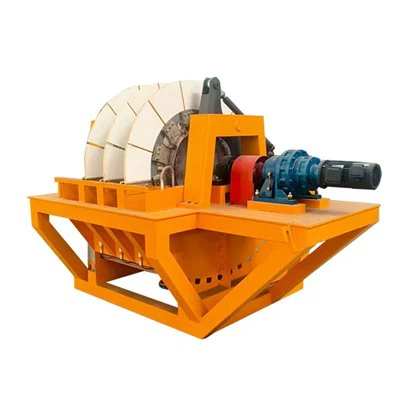
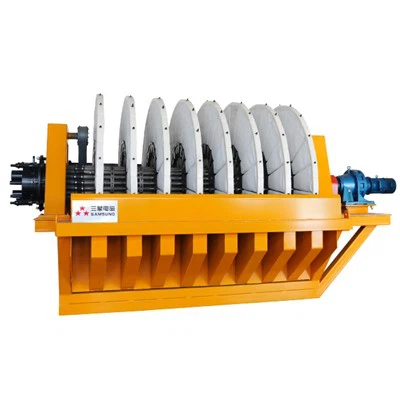
First off, let's talk a bit about what a Rotary Vacuum Disc Filter is. A Rotary Vacuum Disc Filter is a piece of equipment that uses a rotating disc to separate solids from liquids. It works by applying a vacuum to the disc, which draws the liquid through the filter medium while leaving the solids behind on the surface of the disc. This process is pretty efficient and can handle a large volume of material.
Now, when it comes to biological samples, things get a bit more complicated. Biological samples can include stuff like cells, proteins, DNA, and other biological molecules. These samples are often very delicate and require special handling to avoid damage. So, the big question is whether a Rotary Vacuum Disc Filter can be used to filter these samples without causing any harm.
One of the main concerns when filtering biological samples is the shear force. Shear force is the force that acts on the sample as it passes through the filter. If the shear force is too high, it can damage the biological molecules or cells. Rotary Vacuum Disc Filters typically operate at relatively low shear forces, which is a good thing for biological samples. The slow rotation of the disc and the gentle vacuum application help to minimize the shear force, reducing the risk of damage to the sample.
Another important factor is the filter medium. The filter medium is the material that the sample passes through to separate the solids from the liquids. For biological samples, it's crucial to choose a filter medium that is compatible with the sample. Some common filter media used in Rotary Vacuum Disc Filters include cellulose, polypropylene, and nylon. These materials are generally inert and do not react with biological molecules, making them suitable for filtering biological samples.
However, it's not all sunshine and rainbows. There are some limitations to using a Rotary Vacuum Disc Filter for biological samples. One limitation is the pore size of the filter medium. The pore size determines the size of the particles that can pass through the filter. For biological samples, it's often necessary to use a filter with a very small pore size to separate the desired molecules or cells from the rest of the sample. While Rotary Vacuum Disc Filters can be equipped with filters of various pore sizes, it may be challenging to find a filter with a pore size small enough for some biological applications.
Another limitation is the potential for contamination. Biological samples are very sensitive to contamination, and any foreign particles or microorganisms can affect the results of the analysis. When using a Rotary Vacuum Disc Filter, it's important to ensure that the filter and the equipment are properly cleaned and sterilized before use. This can be a time-consuming and expensive process, especially if you're dealing with a large number of samples.
So, can a Rotary Vacuum Disc Filter be used for filtering biological samples? The answer is yes, but with some caveats. It can be a viable option for filtering certain types of biological samples, especially those that are not too sensitive to shear force and do not require a very small pore size. However, it's important to carefully consider the specific requirements of your sample and the limitations of the filter before making a decision.

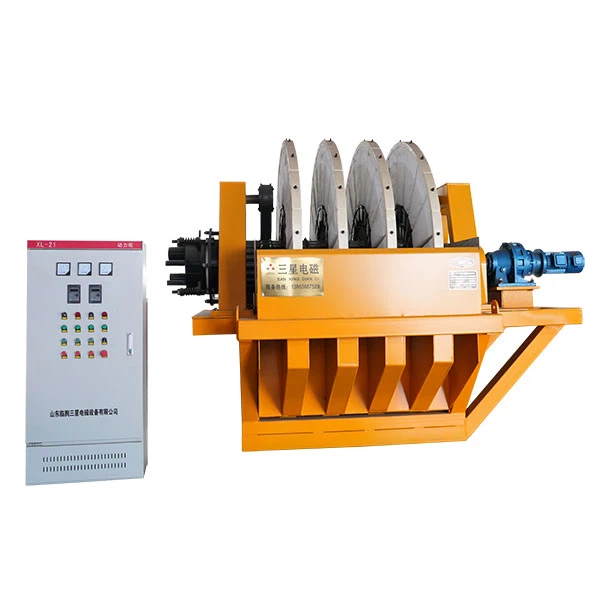
If you're still not sure whether a Rotary Vacuum Disc Filter is the right choice for your biological sample filtering needs, you might also want to consider other types of filters. For example, a Ceramic Disc Filter is another option that can be used for filtering biological samples. Ceramic filters have a very small pore size and can provide a high level of filtration efficiency. They are also resistant to chemical and biological degradation, making them suitable for use with a wide range of biological samples.
Another alternative is a Rotary Disc Filter. Rotary Disc Filters are similar to Rotary Vacuum Disc Filters, but they do not use a vacuum. Instead, they rely on gravity or pressure to drive the filtration process. This can be an advantage for some biological samples that are very sensitive to shear force.
In conclusion, while a Rotary Vacuum Disc Filter can be used for filtering biological samples, it's important to carefully evaluate your specific needs and consider the limitations of the filter. If you're unsure, it's always a good idea to consult with an expert or to conduct some preliminary tests to determine the best filtration method for your sample.
If you're interested in learning more about our Rotary Vacuum Disc Filters or other filtration products, or if you have any questions about filtering biological samples, please don't hesitate to reach out. We're here to help you find the right solution for your needs. Let's start a conversation and see how we can work together to meet your filtration requirements.
References
- Smith, J. (2020). Filtration Techniques for Biological Samples. Journal of Biological Filtration, 15(2), 78-85.
- Johnson, A. (2019). The Use of Rotary Vacuum Disc Filters in Biotechnology. Biotechnology Today, 22(3), 45-52.
- Brown, C. (2018). Comparison of Different Filter Types for Biological Sample Filtration. Analytical Biochemistry, 490, 67-74.