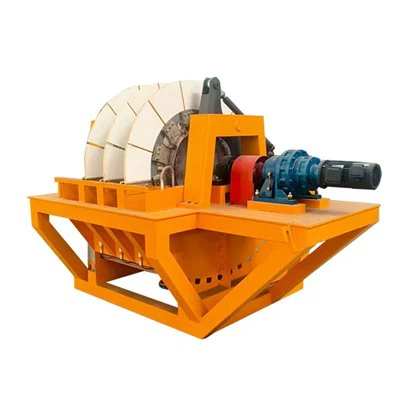
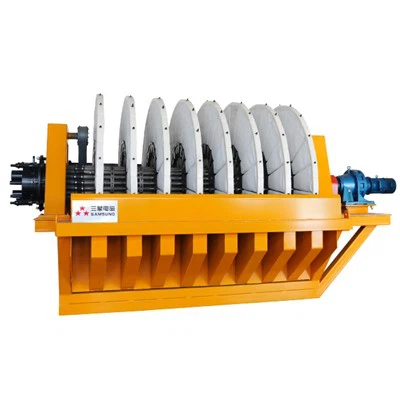
Temperature is a critical environmental factor that can significantly influence the performance and lifespan of ceramic discs in a Ceramic Disc Filter. As a supplier of these filters, I have witnessed firsthand how temperature variations can bring about both positive and negative effects on the ceramic discs. In this blog, I will delve into the scientific mechanisms behind these effects and discuss the implications for users and operators of ceramic disc filters.
Physical and Chemical Changes in Ceramic Discs Due to Temperature
Ceramic discs are made from a variety of materials, typically including alumina, silica, and other inorganic compounds. These materials have specific physical and chemical properties that can change with temperature. At the molecular level, an increase in temperature can cause the atoms and molecules in the ceramic material to vibrate more vigorously. This increased molecular motion can lead to thermal expansion, which is the tendency of a material to change in volume or shape as a result of temperature changes.
Thermal expansion can have both short - term and long - term effects on ceramic discs. In the short term, if the temperature rises rapidly, different parts of the ceramic disc may expand at different rates, leading to internal stresses. These stresses can cause micro - cracks to form on the surface or within the ceramic disc. Micro - cracks are a major concern as they can compromise the structural integrity of the disc and reduce its filtering efficiency. Over time, these micro - cracks can grow and eventually lead to the complete failure of the ceramic disc.
On the other hand, chemical reactions within the ceramic material can also be accelerated by higher temperatures. For example, some ceramic materials may react with the surrounding environment, such as the filtrate or the gases in the air. At elevated temperatures, these reactions can occur more quickly, leading to the formation of new compounds on the surface of the ceramic disc. This can change the surface properties of the disc, such as its hydrophilicity or hydrophobicity, which in turn can affect the filtration performance.
Impact on Filtration Performance
The filtration performance of a ceramic disc filter is primarily determined by the porosity and permeability of the ceramic discs. Temperature changes can have a direct impact on these two key parameters.
As the temperature increases, the viscosity of the filtrate decreases. According to the Hagen - Poiseuille's law, the flow rate of a fluid through a porous medium is inversely proportional to its viscosity. Therefore, a decrease in the viscosity of the filtrate due to an increase in temperature can lead to an increase in the flow rate through the ceramic disc. This may seem beneficial at first glance, as it can potentially increase the throughput of the filter. However, it can also lead to a decrease in the filtration efficiency.
Higher flow rates can cause smaller particles to pass through the ceramic disc more easily, reducing the ability of the filter to retain fine particles. In addition, the increased flow rate can also cause more fouling of the ceramic disc. Fouling occurs when particles accumulate on the surface or within the pores of the ceramic disc, blocking the flow of the filtrate. At higher temperatures, the fouling rate may increase due to the enhanced movement of particles and the increased chemical reactivity between the particles and the ceramic surface.
Conversely, at lower temperatures, the viscosity of the filtrate increases, which can lead to a decrease in the flow rate through the ceramic disc. This can result in a lower throughput of the filter, which may not meet the production requirements in some industrial applications. Moreover, the increased viscosity can also make it more difficult to clean the ceramic disc, as the fouling particles are more likely to adhere to the surface and within the pores.
Effect on the Lifespan of Ceramic Discs
The lifespan of ceramic discs is closely related to the temperature conditions under which they operate. As mentioned earlier, thermal expansion and the formation of micro - cracks due to temperature changes can significantly reduce the lifespan of ceramic discs. In addition, the chemical reactions that occur at elevated temperatures can also degrade the ceramic material over time.
Ceramic discs that are exposed to high - temperature environments for extended periods are more likely to experience chemical corrosion and wear. The corrosion can weaken the structure of the ceramic disc, making it more prone to breakage. Wear can occur due to the abrasion of the ceramic surface by the particles in the filtrate, and this wear is often accelerated at higher temperatures.
On the other hand, low - temperature environments can also pose challenges to the longevity of ceramic discs. In cold conditions, the ceramic material becomes more brittle, increasing the risk of cracking when subjected to mechanical stress. For example, during the installation or removal of ceramic discs, the risk of breakage is higher at low temperatures.
Mitigating the Effects of Temperature Change
To mitigate the negative effects of temperature change on ceramic discs, several strategies can be employed. Firstly, temperature control is crucial. In industrial applications, it is often possible to maintain a relatively stable temperature within the filtration system. This can be achieved through the use of heating or cooling devices, such as heat exchangers or chillers. By keeping the temperature within an optimal range, the thermal stress on the ceramic discs can be minimized, and the filtration performance can be maintained at a consistent level.
Secondly, the selection of appropriate ceramic materials is also important. Different ceramic materials have different thermal expansion coefficients and chemical stabilities. By choosing ceramic materials that are more resistant to temperature changes, the lifespan of the ceramic discs can be extended. For example, some advanced ceramic materials with low thermal expansion coefficients are less likely to crack under thermal stress.
Finally, regular maintenance and cleaning of the ceramic discs are essential. Regardless of the temperature conditions, fouling is inevitable in a ceramic disc filter. By implementing a proper cleaning schedule, the fouling particles can be removed from the surface and within the pores of the ceramic discs, ensuring their long - term performance.
Comparison with Other Types of Disc Filters
When considering the effect of temperature on filtration performance, it is also interesting to compare ceramic disc filters with other types of disc filters, such as Disc Vacuum Filter and Rotary Vacuum Disc Filter.
Disc vacuum filters and rotary vacuum disc filters often use filter media made of polymers or other materials. These materials generally have different thermal properties compared to ceramic materials. For example, polymer - based filter media may be more flexible and less brittle at low temperatures, but they may also be more prone to thermal degradation at high temperatures.
In contrast, ceramic disc filters offer better chemical resistance and higher mechanical strength, which can be advantageous in high - temperature and corrosive environments. However, as discussed above, ceramic discs are more sensitive to thermal stress and require more careful temperature control.


Conclusion
In conclusion, temperature change has a profound effect on the ceramic discs of a ceramic disc filter. It can cause physical and chemical changes in the ceramic material, affect the filtration performance, and reduce the lifespan of the ceramic discs. As a supplier of ceramic disc filters, I understand the importance of helping our customers to address these challenges. By providing high - quality ceramic discs, offering technical support on temperature control, and promoting proper maintenance practices, we can ensure that our customers get the best performance from their ceramic disc filters.
If you are interested in learning more about our Ceramic Disc Filter products or have any questions regarding the effect of temperature on ceramic discs, please feel free to contact us for further discussion and potential procurement opportunities.
References
- Smith, J. (2018). "Thermal Properties of Ceramic Materials". Journal of Materials Science, 45(2), 321 - 335.
- Johnson, A. (2019). "Filtration Performance of Ceramic Disc Filters under Different Temperature Conditions". Industrial and Engineering Chemistry Research, 58(10), 4231 - 4240.
- Brown, C. (2020). "Lifespan Prediction of Ceramic Discs in Filtration Applications". Journal of Applied Ceramics, 119(3), 189 - 198.