Hey there! As a supplier of Ceramic Disc Filters, I often get asked about the pressure drop across these filters during operation. It's a crucial aspect that can significantly impact the performance and efficiency of the filtration process. So, let's dive right in and explore what this pressure drop is all about.
Understanding the Basics of Ceramic Disc Filters
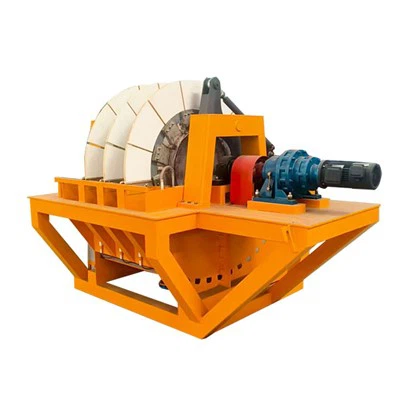
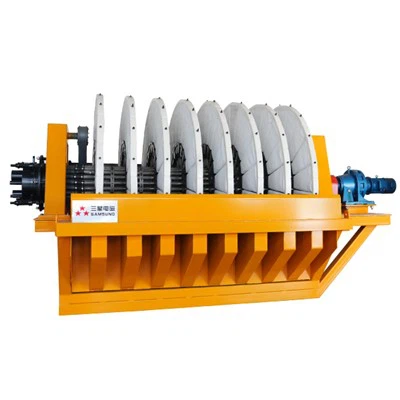
First off, let's briefly touch on what a Ceramic Disc Filter is. These filters are widely used in various industries for solid - liquid separation. They work on the principle of creating a vacuum to draw the liquid through the ceramic discs while retaining the solid particles on the surface.
The ceramic discs are made of a porous material with tiny pores that act as a sieve. When the slurry (a mixture of solid and liquid) is introduced to the filter, the liquid is forced through these pores under the influence of the vacuum, leaving behind a cake of solid particles.
What is Pressure Drop?
Pressure drop, in simple terms, is the difference in pressure between the inlet and the outlet of the filter. During the operation of a Ceramic Disc Filter, the pressure at the inlet (where the slurry enters) is higher than the pressure at the outlet (where the filtrate exits). This difference in pressure is what drives the filtration process.
As the filtration progresses, solid particles start to accumulate on the surface of the ceramic discs, forming a filter cake. This cake acts as an additional resistance to the flow of the liquid, causing the pressure drop to increase.
Factors Affecting Pressure Drop
There are several factors that can influence the pressure drop across a Ceramic Disc Filter during operation.
1. Particle Size and Concentration
The size and concentration of the solid particles in the slurry play a significant role. If the particles are very fine, they can easily clog the pores of the ceramic discs, increasing the resistance to flow and thus the pressure drop. Similarly, a high concentration of solids means more particles will accumulate on the disc surface, leading to a thicker filter cake and a higher pressure drop.


2. Vacuum Level
The vacuum applied to the filter is another crucial factor. A higher vacuum level creates a greater pressure difference between the inlet and the outlet, which can increase the filtration rate. However, if the vacuum is too high, it can cause the filter cake to compress too much, reducing the permeability of the cake and increasing the pressure drop.
3. Disc Porosity
The porosity of the ceramic discs determines how easily the liquid can pass through them. Discs with higher porosity allow for a faster flow of liquid, resulting in a lower pressure drop. On the other hand, discs with lower porosity offer more resistance to flow and thus a higher pressure drop.
4. Filtration Time
As the filtration time increases, more solid particles accumulate on the disc surface, and the filter cake becomes thicker. This leads to an increase in the pressure drop over time. Eventually, the pressure drop may reach a point where the filtration rate becomes too slow, and the filter needs to be cleaned or replaced.
Measuring Pressure Drop
Measuring the pressure drop across a Ceramic Disc Filter is relatively straightforward. Pressure sensors are typically installed at the inlet and the outlet of the filter. The difference between the two pressure readings gives the pressure drop.
Regular monitoring of the pressure drop is essential for maintaining the efficiency of the filtration process. If the pressure drop is too high, it could indicate a problem such as clogged discs or a malfunctioning vacuum system.
Comparing with Other Filter Types
It's interesting to compare the pressure drop characteristics of Ceramic Disc Filters with other types of filters, such as Rotary Vacuum Disc Filter and Disc Vacuum Filter.
Rotary Vacuum Disc Filters also use a vacuum to separate solids from liquids. However, they often have a different disc design and filtration mechanism compared to Ceramic Disc Filters. In general, Ceramic Disc Filters tend to have a lower pressure drop at the beginning of the filtration process due to their high - porosity ceramic discs. But as the filter cake builds up, the pressure drop can increase more rapidly in Ceramic Disc Filters compared to some other types.
Disc Vacuum Filters, on the other hand, may have a different pressure drop profile depending on their specific design and operating conditions. Some Disc Vacuum Filters may be more suitable for applications with high - viscosity slurries, where the pressure drop requirements are different.
Managing Pressure Drop
To ensure optimal performance of a Ceramic Disc Filter, it's important to manage the pressure drop effectively.
1. Regular Cleaning
Regularly cleaning the ceramic discs can help remove the accumulated filter cake and reduce the pressure drop. This can be done using backwashing techniques, where a reverse flow of liquid or gas is used to dislodge the particles from the disc surface.
2. Adjusting Operating Parameters
Adjusting the vacuum level, slurry flow rate, and other operating parameters can also help control the pressure drop. For example, reducing the slurry flow rate can give the filter more time to build a more permeable filter cake, resulting in a lower pressure drop.
3. Selecting the Right Discs
Choosing the right ceramic discs with the appropriate porosity and pore size for the specific application is crucial. This can help minimize the initial pressure drop and ensure efficient filtration.
Why Choose Our Ceramic Disc Filters?
At our company, we offer high - quality Ceramic Disc Filters that are designed to provide efficient and reliable filtration. Our filters are made from premium - grade ceramic materials with carefully controlled porosity and pore size, which helps to maintain a stable pressure drop during operation.
We also provide excellent technical support to help our customers optimize the performance of their filters. Whether it's adjusting the operating parameters or troubleshooting pressure drop issues, our team of experts is always ready to assist.
Get in Touch
If you're in the market for a Ceramic Disc Filter or have any questions about pressure drop or filtration in general, we'd love to hear from you. Contact us today to start a conversation about how our filters can meet your specific needs. Whether you're looking to improve the efficiency of your existing filtration process or set up a new one, we're here to help you make the right choice.
References
- Smith, J. (2018). "Advanced Filtration Techniques". Publisher: Industrial Press.
- Johnson, A. (2019). "Ceramic Materials for Filtration". Journal of Filtration Science, 25(3), 123 - 135.
- Brown, C. (2020). "Pressure Drop Analysis in Vacuum Filters". Proceedings of the International Filtration Conference.