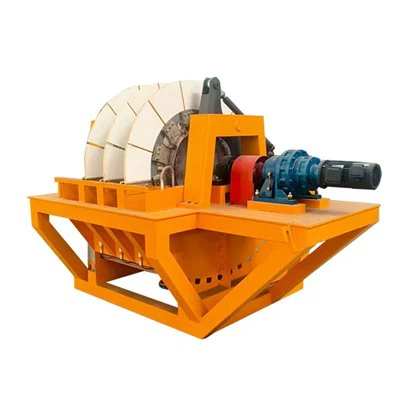
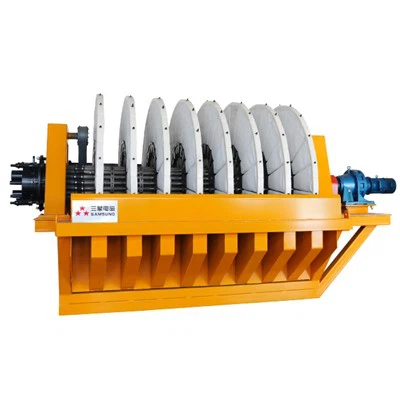
The separation process in a Permanent Magnetic Dry Separator is a critical operation in various industries, including mining, recycling, and food processing. This process relies on the interaction between magnetic materials and the magnetic field generated by the separator to separate magnetic particles from non - magnetic ones. One factor that can significantly influence this separation process is the surface roughness of the conveyor belt used in the separator. As a supplier of Permanent Magnetic Dry Separators, understanding this impact is crucial for providing high - quality equipment and optimizing the separation efficiency for our customers.
The Basics of Permanent Magnetic Dry Separators
Permanent Magnetic Dry Separators are designed to separate magnetic materials from dry bulk materials. They utilize powerful permanent magnets to create a magnetic field that attracts magnetic particles as the material passes over the conveyor belt. There are different types of permanent magnetic dry separators available, such as the Permanent Overband Magnetic Separator, RCYD Permanent Magnetic Self - unloading Separator, and Experimental Dry Magnetic Separator. Each type has its own unique features and applications, but they all share the common goal of efficient magnetic separation.
Surface Roughness of the Conveyor Belt
The surface roughness of a conveyor belt refers to the irregularities on its surface. It can be characterized by parameters such as the average roughness (Ra), which is the arithmetic average of the absolute values of the surface height deviations from the mean line. Conveyor belts can have different levels of surface roughness depending on their manufacturing process, material, and intended use.
Impact on Particle Movement
One of the primary ways in which the surface roughness of the conveyor belt affects the separation process is through its influence on particle movement. When the conveyor belt has a rough surface, the particles being transported on it experience more friction and turbulence. This can cause the particles to move in a more chaotic manner compared to a smooth - surfaced belt.
For magnetic particles, the chaotic movement can either enhance or hinder the separation process. On one hand, the increased movement may allow magnetic particles to come into better contact with the magnetic field, increasing the likelihood of them being attracted to the magnet. This can improve the recovery rate of magnetic materials. On the other hand, if the movement is too chaotic, some magnetic particles may be knocked off the path towards the magnet or may not have enough time to fully interact with the magnetic field. This can result in a lower separation efficiency.
Non - magnetic particles are also affected by the surface roughness. The increased friction can cause non - magnetic particles to stick to the belt or to each other more easily. This can lead to the formation of agglomerates, which may contain both magnetic and non - magnetic particles. As a result, the separation between magnetic and non - magnetic materials becomes more difficult, reducing the purity of the separated products.
Influence on Magnetic Force Distribution
The surface roughness of the conveyor belt can also affect the distribution of the magnetic force acting on the particles. A rough surface can cause local variations in the distance between the particles and the magnet. Since the magnetic force is inversely proportional to the square of the distance, these variations can lead to uneven magnetic force distribution.
In areas where the particles are closer to the magnet due to the surface irregularities, the magnetic force acting on them will be stronger. This can cause some magnetic particles in these regions to be more strongly attracted to the magnet, potentially improving the separation efficiency in those areas. However, in areas where the particles are farther away, the magnetic force may be too weak to effectively attract the magnetic particles. This can result in a non - uniform separation across the width of the conveyor belt, with some parts having a higher concentration of magnetic particles and others having a lower concentration.
Effect on Belt Wear and Maintenance
The surface roughness of the conveyor belt can also have implications for its wear and maintenance. A rough surface is more likely to cause abrasion on the belt itself and on the other components of the separator, such as the rollers. This can lead to increased wear and tear, reducing the lifespan of the belt and increasing the frequency of maintenance and replacement.
Moreover, the rough surface can trap dust and debris, which can further accelerate the wear process. This not only affects the performance of the conveyor belt but also the overall efficiency of the separation process. As the belt wears, its surface characteristics may change, which can in turn affect the particle movement and magnetic force distribution as described above.
Optimizing Surface Roughness for Separation
To optimize the separation process in a Permanent Magnetic Dry Separator, it is important to carefully select the surface roughness of the conveyor belt. The optimal surface roughness will depend on several factors, including the type of material being separated, the strength of the magnetic field, and the operating conditions of the separator.


For materials with larger magnetic particles, a slightly rougher surface may be beneficial as it can enhance the movement of the particles and improve their contact with the magnetic field. However, for materials with smaller magnetic particles, a smoother surface may be more appropriate to ensure a more uniform magnetic force distribution and prevent the particles from being lost due to excessive movement.
In addition, regular monitoring and maintenance of the conveyor belt are essential. This includes checking the surface roughness over time and replacing the belt when it shows signs of excessive wear. By maintaining the optimal surface roughness, we can ensure the long - term efficiency and reliability of the separation process.
Conclusion
The surface roughness of the conveyor belt has a significant impact on the separation process in a Permanent Magnetic Dry Separator. It affects particle movement, magnetic force distribution, and belt wear, all of which can influence the efficiency and quality of the separation. As a supplier of Permanent Magnetic Dry Separators, we are committed to providing our customers with the best - in - class equipment and technical support. By understanding the relationship between surface roughness and separation performance, we can help our customers optimize their separation processes and achieve better results.
If you are interested in learning more about our Permanent Magnetic Dry Separators or have any questions regarding the separation process, we encourage you to contact us for a detailed discussion. Our team of experts is ready to assist you in selecting the most suitable equipment and optimizing your operations.
References
- Smith, J. (2018). "Magnetic Separation Technology: Principles and Applications". Journal of Mining and Mineral Processing, 25(3), 123 - 135.
- Johnson, A. (2019). "Effect of Conveyor Belt Surface Characteristics on Material Handling". International Journal of Conveyor Systems, 18(2), 78 - 89.
- Brown, C. (2020). "Optimization of Magnetic Separation Processes in the Mining Industry". Mining Engineering Review, 32(4), 201 - 215.