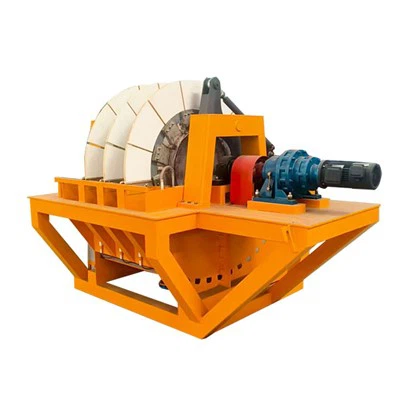
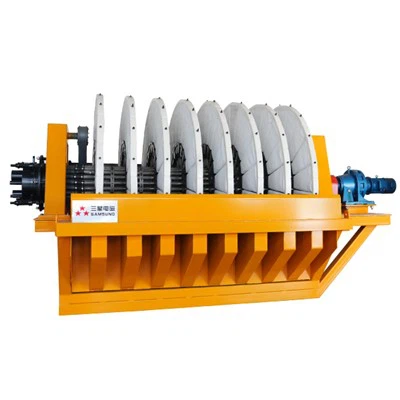
Hey there! As a supplier of Rotary Vacuum Disc Filters, I've seen firsthand how crucial disc design is when it comes to the overall performance of these machines. In this blog, I'm gonna break down the effects of disc design on the Rotary Vacuum Disc Filter and why it matters so much.
Let's start with the basics. A Rotary Vacuum Disc Filter is a type of filtration equipment that uses a rotating disc to separate solids from liquids. It's widely used in various industries like mining, chemical, and food processing. The discs are the heart of the filter, and their design can significantly impact how well the filter works.
Surface Area and Filtration Efficiency
One of the most important aspects of disc design is the surface area. The larger the surface area of the disc, the more area there is for filtration to occur. This means that more liquid can pass through the filter at a given time, increasing the overall filtration efficiency.
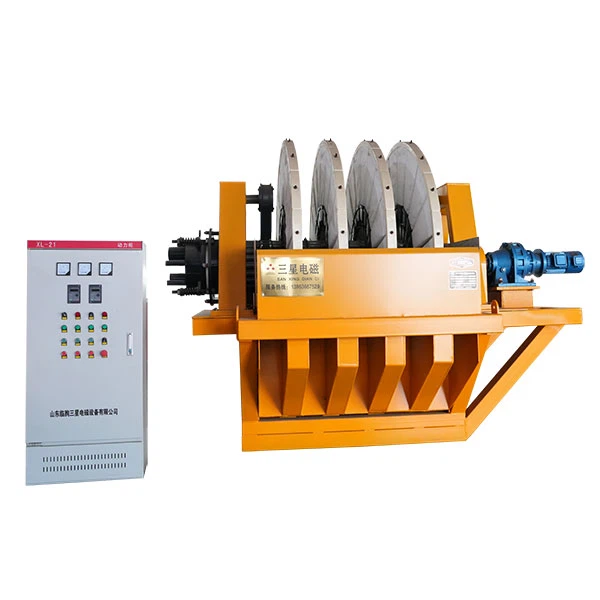

Think of it like a sieve. If you have a small sieve, it'll take longer to sift through a large amount of material. But if you have a bigger sieve, you can get the job done much faster. The same principle applies to the discs in a Rotary Vacuum Disc Filter. A disc with a larger surface area can handle a higher flow rate of liquid, reducing the filtration time and increasing productivity.
For example, let's say you're filtering a slurry in a mining operation. If you have a filter with discs that have a small surface area, it might take hours to filter a large volume of slurry. But if you upgrade to discs with a larger surface area, you could potentially cut that time in half. This not only saves time but also reduces energy consumption, as the filter doesn't have to run for as long.
Pore Size and Particle Retention
Another key factor in disc design is the pore size. The pore size determines which particles can pass through the disc and which ones are retained. If the pore size is too large, some of the solid particles that you're trying to separate will pass through the filter, reducing the quality of the filtrate. On the other hand, if the pore size is too small, it can cause clogging and reduce the flow rate of the liquid.
Finding the right pore size is a balancing act. It depends on the size and nature of the particles in the slurry. For instance, in a food processing application, you might need a disc with a very small pore size to remove fine particles and ensure a clear filtrate. In a mining application, where the particles are generally larger, a slightly larger pore size might be sufficient.
We offer a range of discs with different pore sizes to meet the specific needs of our customers. Whether you're dealing with fine powders or coarse particles, we can help you choose the right disc design for your application. You can check out our Rotary Vacuum Disc Filter page for more information on the available options.
Disc Material and Durability
The material used to make the discs also plays a significant role in the performance of the Rotary Vacuum Disc Filter. Different materials have different properties, such as chemical resistance, abrasion resistance, and porosity.
For example, ceramic discs are known for their high chemical resistance and durability. They can withstand harsh chemicals and abrasive particles without getting damaged easily. This makes them a great choice for applications in the chemical and mining industries, where the slurry might contain corrosive substances. You can learn more about Ceramic Disc Filter on our website.
On the other hand, some applications might require discs made of other materials, such as stainless steel or polypropylene. Stainless steel discs are strong and resistant to corrosion, while polypropylene discs are lightweight and cost-effective. The choice of material depends on the specific requirements of the application, such as the chemical composition of the slurry, the operating temperature, and the budget.
Disc Configuration and Flow Pattern
The configuration of the discs in the filter can also affect the overall performance. The way the discs are arranged and the flow pattern of the liquid through the filter can impact the filtration efficiency and the quality of the filtrate.
For example, some Rotary Vacuum Disc Filters have a single-disc configuration, while others have multiple discs stacked together. A multi-disc configuration can increase the overall surface area for filtration and improve the efficiency of the filter. It can also provide better control over the flow pattern of the liquid, ensuring that the filtration process is more uniform.
In addition, the design of the disc itself can influence the flow pattern. Some discs have a special shape or structure that helps to direct the liquid flow and prevent channeling. Channeling occurs when the liquid finds a preferential path through the filter, bypassing some of the filtration media. This can reduce the effectiveness of the filtration and lead to uneven particle retention.
Impact on Maintenance and Operating Costs
The disc design can also have a significant impact on the maintenance and operating costs of the Rotary Vacuum Disc Filter. A well-designed disc can reduce the frequency of maintenance and replacement, saving both time and money.
For example, discs that are made of durable materials and have a good design are less likely to get damaged or clogged. This means that they don't need to be replaced as often, reducing the cost of spare parts. In addition, a filter with a disc design that promotes efficient filtration can reduce the energy consumption, as the filter doesn't have to work as hard to achieve the desired level of filtration.
On the other hand, a poorly designed disc can lead to frequent breakdowns and maintenance issues. This can result in downtime, which can be costly for the operation. It can also increase the cost of maintenance, as more labor and spare parts are required to keep the filter running.
Conclusion
In conclusion, the disc design is a critical factor in the overall performance of a Rotary Vacuum Disc Filter. It affects the filtration efficiency, particle retention, durability, and maintenance costs of the filter. As a supplier, we understand the importance of choosing the right disc design for each application. That's why we offer a wide range of discs with different surface areas, pore sizes, materials, and configurations to meet the specific needs of our customers.
If you're in the market for a Rotary Vacuum Disc Filter or need to upgrade your existing filter, we'd love to help. Our team of experts can work with you to understand your requirements and recommend the best disc design for your application. You can visit our Rotary Disc Filter page to learn more about our products and services.
Don't hesitate to reach out to us if you have any questions or want to discuss your specific needs. We're here to provide you with the best filtration solutions and help you optimize your operation. Let's work together to achieve the best results!
References
- Smith, J. (2020). Filtration Technology Handbook. Elsevier.
- Jones, A. (2019). Advances in Rotary Vacuum Filtration. Chemical Engineering Journal.