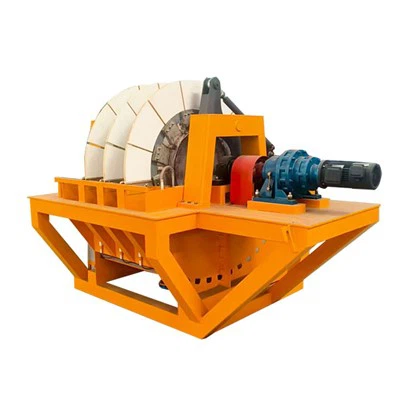
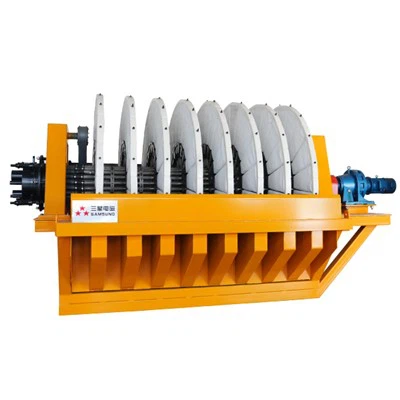
Hey there! As a supplier of Rotary Disc Filters, I'm super stoked to dive into the nitty - gritty of how these awesome machines work. Let's get right into the cleaning mechanism of a Rotary Disc Filter.
First off, what the heck is a Rotary Disc Filter? Well, it's a piece of equipment that's used in a bunch of industries, like wastewater treatment, mining, and food processing. It's designed to separate solids from liquids in a super efficient way. If you're curious about other types of disc filters, you can check out the Ceramic Disc Filter and Disc Vacuum Filter on our website. And of course, for more details on the Rotary Disc Filter itself, head over to Rotary Disc Filter.
So, how does the cleaning mechanism of a Rotary Disc Filter actually work? It all starts with the basic structure of the filter. A Rotary Disc Filter typically consists of a series of discs mounted on a central shaft. These discs are covered with a filter medium, which can be made of materials like fabric, mesh, or even ceramic, depending on the application.
When the dirty liquid enters the filter, it flows through the filter medium on the discs. The solids in the liquid get trapped on the surface of the filter medium, while the clean liquid passes through and is collected on the other side. But as the solids build up on the filter medium, the flow rate of the liquid through the filter starts to decrease. That's when the cleaning mechanism kicks in.
One of the most common cleaning methods for Rotary Disc Filters is backwashing. Backwashing involves reversing the flow of liquid through the filter medium. Instead of the liquid flowing from the outside of the disc to the inside, it's forced to flow from the inside out. This sudden reversal of flow dislodges the solids that have been trapped on the surface of the filter medium. The dislodged solids are then carried away by the backwash liquid and removed from the filter system.
The backwashing process is usually automated and is triggered by a pressure differential sensor. When the pressure drop across the filter medium reaches a certain threshold, it indicates that the filter is getting clogged and needs to be cleaned. The sensor sends a signal to the control system, which then activates the backwash valves.
Another cleaning method that's sometimes used in conjunction with backwashing is mechanical scraping. In some Rotary Disc Filters, there are scrapers that are in contact with the surface of the discs. As the discs rotate, the scrapers gently scrape off the accumulated solids from the filter medium. This helps to prevent the solids from building up too much and reduces the frequency of backwashing.
The scrapers can be made of different materials, such as rubber or plastic, depending on the type of filter medium and the nature of the solids being filtered. They need to be designed in such a way that they don't damage the filter medium while still being effective at removing the solids.
In addition to backwashing and mechanical scraping, some Rotary Disc Filters also use air scouring as a cleaning method. Air scouring involves injecting compressed air into the filter system. The air bubbles create turbulence in the liquid around the filter medium, which helps to loosen the solids that are stuck to the surface. The combination of air scouring and backwashing can be very effective at cleaning the filter, especially when dealing with sticky or hard - to - remove solids.
Now, let's talk about the advantages of the cleaning mechanism in Rotary Disc Filters. One of the biggest advantages is its efficiency. The automated cleaning process ensures that the filter can operate continuously for long periods of time without manual intervention. This means that the filter can maintain a high flow rate and a consistent level of filtration performance.
Another advantage is the cost - effectiveness. Since the cleaning process is automated, it reduces the labor costs associated with manual cleaning. Additionally, the use of backwashing and other cleaning methods helps to extend the lifespan of the filter medium, which in turn reduces the replacement costs.
The flexibility of the cleaning mechanism is also a plus. Different cleaning methods can be combined or adjusted depending on the specific requirements of the application. For example, in a wastewater treatment plant where the solids content is very high, a more aggressive cleaning regime with frequent backwashing and air scouring may be required. On the other hand, in a food processing application where the solids are relatively easy to remove, a less frequent cleaning schedule may be sufficient.
However, like any piece of equipment, Rotary Disc Filters also have some challenges when it comes to the cleaning mechanism. One of the main challenges is the proper disposal of the backwash liquid. The backwash liquid contains a high concentration of solids, and it needs to be treated or disposed of in an environmentally friendly way. This may involve additional treatment processes, such as sedimentation, filtration, or even chemical treatment.
Another challenge is the maintenance of the cleaning components. The backwash valves, scrapers, and air scouring systems need to be regularly inspected and maintained to ensure that they are working properly. Any malfunction in these components can lead to inefficient cleaning and reduced filter performance.
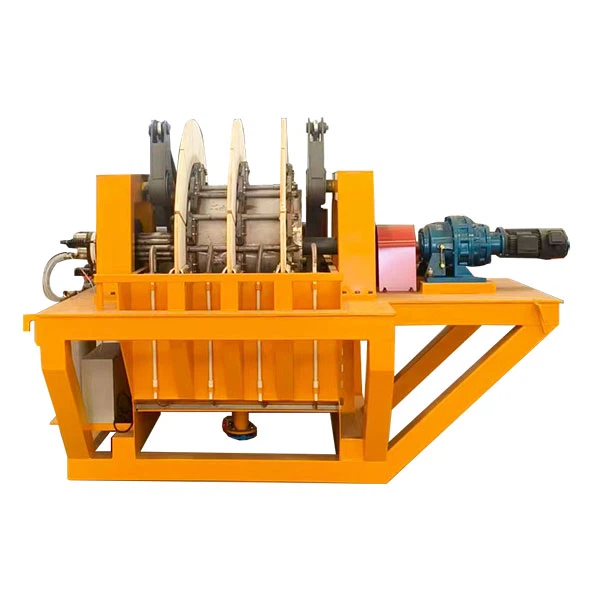
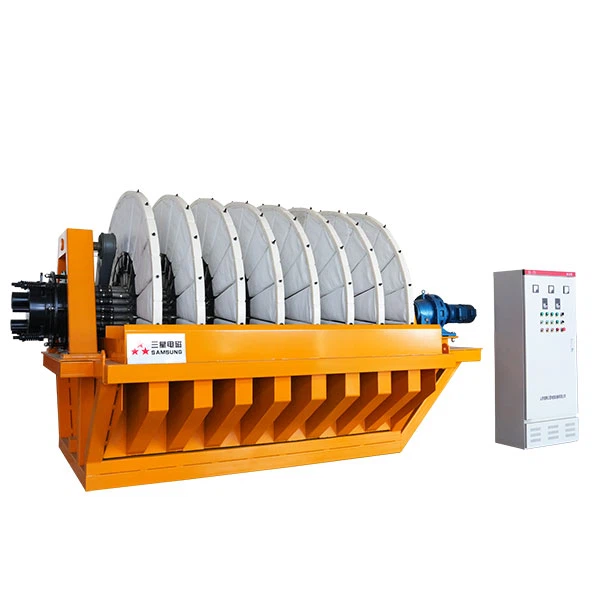
In conclusion, the cleaning mechanism of a Rotary Disc Filter is a crucial part of its operation. It ensures that the filter can continue to function effectively by removing the solids that accumulate on the filter medium. Whether it's through backwashing, mechanical scraping, or air scouring, these cleaning methods work together to keep the filter running smoothly.
If you're in the market for a Rotary Disc Filter or have any questions about how they work, don't hesitate to reach out. We're here to help you find the right solution for your specific application. Whether you're dealing with wastewater treatment, mining, or food processing, our Rotary Disc Filters can provide you with reliable and efficient filtration. So, let's start a conversation and see how we can meet your filtration needs.
References:
- "Filtration Handbook" by Christopher D. Dickenson
- Industry reports on wastewater treatment and filtration technologies