Hey there! As a supplier of Rotary Vacuum Disc Filters, I've seen firsthand how crucial it is to adjust the feed rate properly to optimize the performance of these machines. In this blog, I'm gonna share some tips and insights on how you can do just that.
Understanding the Basics of Rotary Vacuum Disc Filters
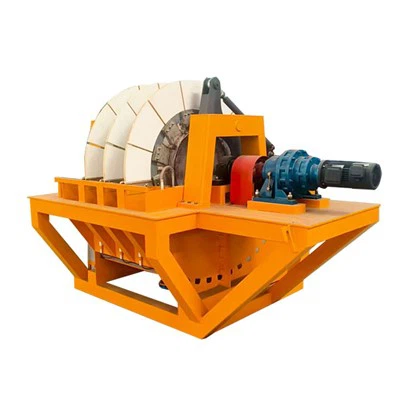
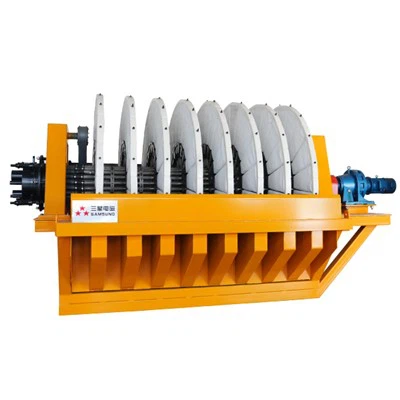
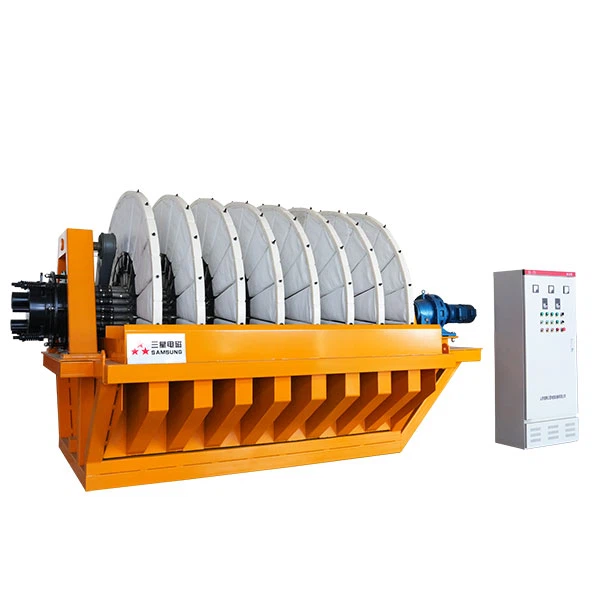
Before we dive into feed rate adjustment, let's quickly go over what a Rotary Vacuum Disc Filter is. A Rotary Vacuum Disc Filter is a continuous solid-liquid separation device. It consists of multiple discs mounted on a horizontal shaft, which rotates slowly in a trough filled with the slurry to be filtered. A vacuum is applied to the discs, causing the liquid to pass through the filter medium while the solids are retained on the surface of the discs.
These filters are widely used in various industries such as mining, chemical, and food processing. They offer high filtration efficiency, large throughput, and are relatively easy to operate and maintain. There are also related types like Disc Vacuum Filter and Ceramic Disc Filter, each with its own unique features and applications.
Why Feed Rate Matters
The feed rate is the amount of slurry that is introduced into the filter per unit of time. It plays a vital role in the performance of the Rotary Vacuum Disc Filter. If the feed rate is too low, the filter may not be fully utilized, resulting in lower throughput and higher operating costs per unit of filtered product. On the other hand, if the feed rate is too high, the filter may become overloaded, leading to poor filtration efficiency, increased cake moisture content, and potential damage to the filter medium.
Factors Affecting Feed Rate Adjustment
Slurry Characteristics
The properties of the slurry, such as particle size distribution, solids concentration, and viscosity, have a significant impact on the optimal feed rate. For example, a slurry with a high solids concentration and large particle size may require a lower feed rate to ensure proper filtration. In contrast, a slurry with a low solids concentration and small particle size can usually tolerate a higher feed rate.
Filter Medium
The type and condition of the filter medium also affect the feed rate. Different filter media have different filtration rates and capacities. A clogged or damaged filter medium will reduce the filtration efficiency and may require a lower feed rate to maintain acceptable performance.
Vacuum Pressure
The vacuum pressure applied to the filter discs influences the rate at which the liquid passes through the filter medium. Higher vacuum pressures generally result in faster filtration rates, allowing for a higher feed rate. However, excessive vacuum pressure can cause the filter cake to become too compact, reducing the permeability and potentially leading to blinding of the filter medium.
How to Adjust the Feed Rate
Step 1: Monitor the Filter Performance
The first step in adjusting the feed rate is to closely monitor the performance of the Rotary Vacuum Disc Filter. Keep an eye on key parameters such as the filtration rate, cake thickness, cake moisture content, and vacuum pressure. These parameters will give you an indication of how well the filter is operating and whether the feed rate needs to be adjusted.
Step 2: Start with a Conservative Feed Rate
When starting up the filter or making changes to the operating conditions, it's a good idea to start with a relatively low feed rate. This allows you to gradually assess the filter's performance and make adjustments as needed. You can then increase the feed rate in small increments while monitoring the key performance parameters.
Step 3: Analyze the Slurry and Filter Medium
Regularly analyze the properties of the slurry and the condition of the filter medium. If the slurry characteristics change, such as an increase in solids concentration or a change in particle size distribution, you may need to adjust the feed rate accordingly. Similarly, if the filter medium shows signs of clogging or damage, take appropriate measures to clean or replace it and adjust the feed rate as necessary.

Step 4: Optimize the Vacuum Pressure
Work on optimizing the vacuum pressure to achieve the best balance between filtration rate and cake quality. Adjust the vacuum pressure in conjunction with the feed rate to ensure that the filter operates at its maximum efficiency. Remember, too high or too low vacuum pressure can have a negative impact on the feed rate and overall performance.
Step 5: Use Automation and Control Systems
Many modern Rotary Vacuum Disc Filters are equipped with automation and control systems that can help you adjust the feed rate more accurately and efficiently. These systems can monitor the key performance parameters in real-time and make automatic adjustments to the feed rate based on pre-set algorithms. By using such systems, you can minimize human error and ensure consistent filter performance.
Case Study: Feed Rate Optimization
Let's take a look at a real-world example of feed rate optimization. A mining company was using a Rotary Vacuum Disc Filter to separate the solids from a slurry in their copper ore processing plant. Initially, they were experiencing low throughput and high cake moisture content. After conducting a detailed analysis of the slurry characteristics and the filter performance, they found that the feed rate was too high for the given slurry properties.
They decided to reduce the feed rate by 20% and also made some adjustments to the vacuum pressure. As a result, the filtration rate improved significantly, and the cake moisture content decreased from 25% to 18%. This not only increased the throughput of the filter but also reduced the energy consumption and the cost of downstream drying processes.
Conclusion
Adjusting the feed rate is a critical aspect of optimizing the performance of a Rotary Vacuum Disc Filter. By understanding the factors that affect the feed rate and following the steps outlined above, you can ensure that your filter operates at its maximum efficiency, resulting in higher throughput, better cake quality, and lower operating costs.
If you're in the market for a Rotary Vacuum Disc Filter or need help with feed rate optimization for your existing filter, don't hesitate to reach out. We're here to provide you with the best solutions and support to meet your specific needs. Let's start a conversation and see how we can work together to improve your filtration processes.
References
- Smith, J. (2020). "Solid-Liquid Separation Handbook". Elsevier.
- Johnson, R. (2019). "Filtration Technology in the Mining Industry". Mining Journal.