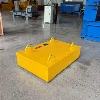
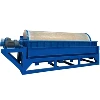
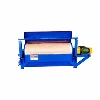
Industry Track Record & Custom Engineering Capacity A trustworthy manufacturer shall have proven project experience in your specific sector, rather than only offering generic standard models. Particle size, moisture content, throughput, types of ferrous contaminants, site layout, explosion-proof or hygienic requirements all determine magnetic circuit design, magnetic field strength and mechanical structure. Reliable suppliers can run material tests, provide simulation and 3D drawings to customize equipment to match your production line. They should share reference cases, site videos and performance data from overseas clients with similar working conditions.
Equipment Performance, Build Quality & Magnetic System Stability The core of magnetic separation equipment lies in magnetic circuit design and magnet material quality. Buyers should verify magnetic field strength, magnetic gradient and iron removal efficiency with third-party test reports. For permanent magnetic separators, anti-demagnetization performance is critical. Electromagnetic models require reliable cooling systems and insulated coils. Wear-resistant lining, sealing structure and easy-clean design affect service life, especially for food and battery powder production where contamination control matters. Always evaluate long-term maintenance cost instead of focusing only on upfront price.
International Certifications & Compliance Certifications are non-negotiable for global markets. Suppliers should hold ISO9001, CE Machinery Directive; ATEX/IECEx for hazardous environments, and FDA / EHEDG material certificates for food-grade applications. Certificates must be verifiable. Electrical design, voltage and wiring standards need to comply with local industrial regulations to prevent installation failure after shipment.
Cross-border Delivery, Documentation & Spare Parts Supply International orders involve packing, sea freight, customs clearance and documentation. Qualified suppliers are familiar with export procedures and deliver on schedule. They supply complete operation manuals, electrical drawings and spare parts lists. Continuous spare parts availability is critical for belts, bearings and seals. Some buyers prefer suppliers with regional spare parts warehouses to minimize production downtime.
Global Technical Support & On-site / Remote Service After-sales service is the biggest challenge for cross-border projects. Prioritize suppliers offering remote commissioning, operator training and optional overseas on-site installation and troubleshooting. Factory Acceptance Test (FAT) before shipment is strongly recommended. Clarify warranty terms, coverage and response time in advance.
Total Cost of Ownership (TCO) Analysis Do not make decisions based purely on FOB price. Calculate energy consumption, spare part replacement frequency, maintenance labor and production loss from downtime. Low-cost equipment often suffers fast magnetic decay, heavy wear and frequent shutdowns, leading to much higher operating costs over time.
Conclusion For overseas buyers, choosing a magnetic separation and iron removal supplier means selecting a long-term technical partner. Balance solution capability, equipment reliability, international compliance, delivery service and total cost of ownership. Material testing, factory audit and reference verification help you find a dependable supplier and secure stable production.