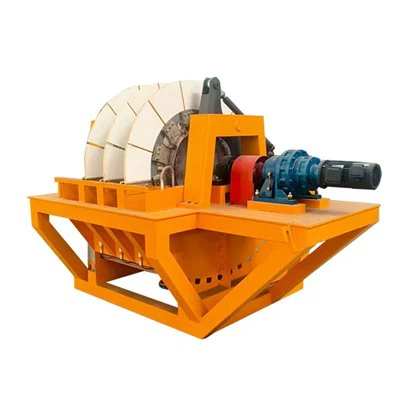
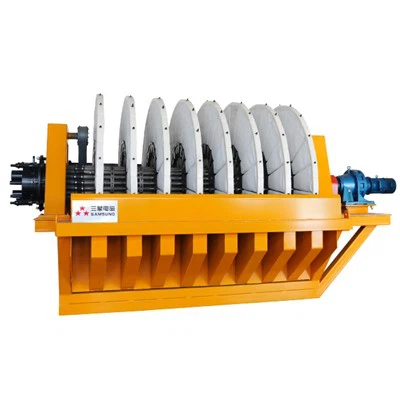
When it comes to the realm of mineral processing and separation, Permanent Magnetic Dry Separators play a pivotal role. As a well - established supplier of these separators, I've witnessed firsthand the importance of understanding the magnetic field strength of these machines. In this blog, I'll delve into what the magnetic field strength of a typical Permanent Magnetic Dry Separator is, why it matters, and how it can impact the overall performance of your separation process.
Understanding Magnetic Field Strength
Magnetic field strength is a measure of the intensity of a magnetic field at a particular point. It is typically measured in units of gauss (G) or tesla (T), where 1 tesla equals 10,000 gauss. In the context of Permanent Magnetic Dry Separators, the magnetic field strength determines the force with which the magnetic particles are attracted to the separator's surface.
A typical Permanent Magnetic Dry Separator can have a magnetic field strength ranging anywhere from 1000 gauss to 12,000 gauss, depending on the specific application and the design of the separator. For more basic separations where the magnetic susceptibility of the target material is high, a lower magnetic field strength may suffice. For instance, when separating highly magnetic minerals like magnetite, a separator with a field strength of around 1000 - 3000 gauss can be effective. This is because magnetite has a strong response to magnetic fields, and a relatively weak field is enough to attract the particles.
On the other hand, when dealing with materials that have lower magnetic susceptibility, such as hematite or ilmenite, a higher magnetic field strength is required. A field strength of 8000 - 12,000 gauss might be necessary to ensure proper separation. These minerals are only weakly magnetic, and a stronger magnetic force is needed to overcome the forces of gravity and particle - particle interactions that keep them from being attracted to the separator.


Factors Affecting Magnetic Field Strength
Several factors can influence the magnetic field strength of a Permanent Magnetic Dry Separator. The first is the type of magnetic material used in the construction of the separator. Neodymium magnets, for example, are known for their high magnetic strength and are often used in modern separators. They can provide a much stronger magnetic field compared to traditional ferrite magnets.
The design of the magnetic circuit also plays a crucial role. A well - designed magnetic circuit can concentrate the magnetic flux, increasing the effective magnetic field strength at the separation area. This involves careful placement of the magnets and the use of magnetic shielding to direct the magnetic field in the desired direction.
The distance between the magnetic source and the material being separated is another important factor. As the distance increases, the magnetic field strength decreases according to the inverse - square law. Therefore, in a Permanent Magnetic Dry Separator, the gap between the magnetic drum or plate and the material flow should be carefully optimized to ensure maximum magnetic force acting on the particles.
Importance of Appropriate Magnetic Field Strength
The right magnetic field strength is essential for the efficient operation of a Permanent Magnetic Dry Separator. If the magnetic field strength is too low, the magnetic particles may not be attracted strongly enough to the separator, resulting in poor separation efficiency. This means that a significant amount of valuable magnetic material may be lost in the non - magnetic fraction, leading to economic losses.
Conversely, if the magnetic field strength is too high, it can cause problems as well. Excessively strong magnetic fields can attract non - magnetic particles along with the magnetic ones, leading to contamination of the separated product. Additionally, a very strong magnetic field can make it difficult to release the captured magnetic particles from the separator, which can lead to clogging and reduced throughput.
Applications and Corresponding Magnetic Field Strengths
In the mining industry, Permanent Magnetic Dry Separators are used for various applications. In the pre - concentration of iron ore, for example, a separator with a magnetic field strength of 2000 - 5000 gauss is commonly used. This helps to remove a significant portion of the non - magnetic gangue material before further processing, reducing the amount of material that needs to be handled in subsequent steps.
In the recycling industry, these separators are used to separate magnetic metals from non - magnetic waste. For separating ferrous metals from municipal solid waste or scrap metal, a magnetic field strength of 3000 - 6000 gauss is often sufficient. This allows for the efficient recovery of valuable iron and steel components.
Comparison with Other Types of Separators
It's also worth comparing the magnetic field strength of Permanent Magnetic Dry Separators with other types of magnetic separators, such as the Permanent Magnet Wet Magnetic Separator and the Permanent Magnetic Wet Drum Separator. In general, wet magnetic separators can achieve higher magnetic field strengths in some cases. This is because the liquid medium in wet separators can reduce the effects of particle - particle interactions and help the magnetic particles move more freely towards the magnetic source.
However, Permanent Magnetic Dry Separators have their own advantages. They are more suitable for applications where a dry separation process is required, such as in arid regions or when the material cannot be exposed to water. Their magnetic field strength, although sometimes lower than that of wet separators, is still sufficient for a wide range of applications.
The Role of Experimental Dry Magnetic Separators
For those who are unsure about the exact magnetic field strength required for their specific application, Experimental Dry Magnetic Separators can be a valuable tool. These separators allow operators to test different magnetic field strengths and operating conditions on a small scale. By running tests with an experimental separator, you can determine the optimal magnetic field strength for your material, which can then be applied to a full - scale production separator.
Conclusion
In conclusion, the magnetic field strength of a typical Permanent Magnetic Dry Separator can vary widely depending on the application, the type of magnetic material, and the design of the separator. Understanding this parameter is crucial for achieving efficient and effective separation. Whether you're in the mining, recycling, or other industries, choosing the right magnetic field strength can make a significant difference in the quality and quantity of your separated products.
If you're considering purchasing a Permanent Magnetic Dry Separator for your business, it's important to consult with a knowledgeable supplier. We have the expertise and experience to help you select the separator with the appropriate magnetic field strength for your specific needs. Our team can provide detailed information, conduct tests, and offer customized solutions. We invite you to reach out to us to discuss your requirements and start a productive dialogue about how our Permanent Magnetic Dry Separators can enhance your separation process.
References
- "Magnetic Separation: Principles and Applications" - A comprehensive textbook on magnetic separation techniques.
- Industry reports on mineral processing and recycling, which often include data on the use of Permanent Magnetic Dry Separators.