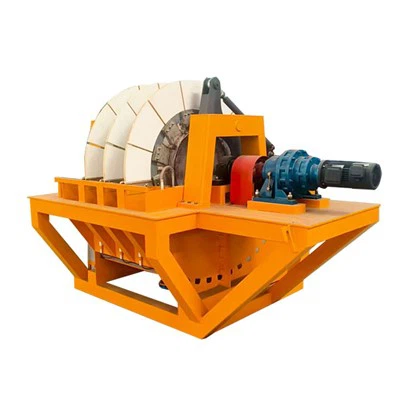
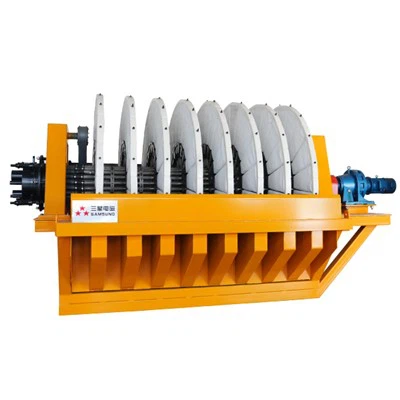
As a supplier of RCDB Dry Electromagnetic Separators, I often receive inquiries about the installation size of this remarkable piece of equipment. Understanding the installation size is crucial for customers as it directly impacts the integration of the separator into their existing production lines or new facilities. In this blog, I will delve into the details of the installation size of the RCDB Dry Electromagnetic Separator, providing you with comprehensive information to make informed decisions.
Understanding the RCDB Dry Electromagnetic Separator
Before we discuss the installation size, let's briefly understand what the RCDB Dry Electromagnetic Separator is and its applications. The RCDB Dry Electromagnetic Separator is a powerful device designed to remove ferrous materials from dry bulk materials. It is widely used in industries such as mining, cement, ceramics, and food processing to ensure the purity of the final product and protect downstream equipment from damage caused by iron contamination.
The separator operates on the principle of electromagnetic force. When an electric current passes through the coil of the separator, a strong magnetic field is generated. Ferrous materials in the passing dry bulk materials are attracted to the magnetic field and are separated from the non - ferrous materials.
Factors Affecting the Installation Size
The installation size of the RCDB Dry Electromagnetic Separator is influenced by several factors. These factors need to be carefully considered to determine the most suitable size for your specific application.
1. Belt Width
The width of the conveyor belt on which the separator will be installed is a primary factor. The separator needs to cover the entire width of the belt to effectively remove ferrous materials. Generally, the width of the separator is designed to match or slightly exceed the belt width. For example, if you have a conveyor belt with a width of 800 mm, you would typically choose an RCDB Dry Electromagnetic Separator with a corresponding width to ensure optimal performance.
2. Material Handling Capacity
The amount of dry bulk material that needs to be processed per unit of time also affects the installation size. Higher material handling capacities may require larger separators to ensure that all ferrous materials are captured. A separator with a larger cross - sectional area can handle a greater volume of material without being overwhelmed.
3. Magnetic Field Strength Requirements
The strength of the magnetic field required to separate ferrous materials depends on the nature of the materials being processed. If the ferrous materials are small or weakly magnetic, a stronger magnetic field may be needed. Stronger magnetic fields often require larger coils and more space for the magnetic circuit, which in turn affects the overall size of the separator.
4. Mounting Type
The way the separator is mounted also impacts its installation size. There are different mounting options available, such as over - belt mounting and cross - belt mounting. Over - belt mounting is more common and requires sufficient vertical space above the conveyor belt. Cross - belt mounting may require additional lateral space. The choice of mounting type should be based on the layout of your production facility and the available space.
Standard Installation Sizes
We offer a range of standard installation sizes for the RCDB Dry Electromagnetic Separator to meet the diverse needs of our customers. These sizes are designed based on common conveyor belt widths and material handling capacities in the industry.
| Belt Width (mm) | Separator Width (mm) | Approximate Overall Length (mm) | Approximate Overall Height (mm) |
|---|---|---|---|
| 500 | 500 | 1200 | 600 |
| 650 | 650 | 1300 | 650 |
| 800 | 800 | 1400 | 700 |
| 1000 | 1000 | 1600 | 800 |
| 1200 | 1200 | 1800 | 900 |
It should be noted that these are approximate values, and the actual installation size may vary depending on the specific model and additional features of the separator.
Custom - Made Installation Sizes
In addition to the standard sizes, we also offer custom - made installation sizes for the RCDB Dry Electromagnetic Separator. If your production requirements do not match the standard sizes, our engineering team can design a separator with a specific installation size to meet your exact needs.
We understand that every customer's application is unique. For example, some customers may have limited space in their production facilities, and they require a more compact separator. Others may need a separator with a larger width to handle a wider conveyor belt. Our custom - made solutions ensure that you get a separator that fits perfectly into your production line.
Comparison with Other Separators
When considering the installation size of the RCDB Dry Electromagnetic Separator, it is also useful to compare it with other types of separators. For instance, the Electromagnetic Vibrating Feeder with Separator and the Air - cooled Self - unloading Electromagnetic Separator and the RCDD Dry Self - unloading Electromagnetic Separator.
The Electromagnetic Vibrating Feeder with Separator combines the functions of a feeder and a separator. Its installation size may be more compact compared to the RCDB Dry Electromagnetic Separator, but it is more suitable for applications where a continuous and controlled feeding of materials is required.
The Air - cooled Self - unloading Electromagnetic Separator has a self - unloading mechanism, which may add to its overall size. However, it is very efficient in removing ferrous materials and can be a good choice for high - volume production.
The RCDD Dry Self - unloading Electromagnetic Separator is also designed for self - unloading, and its installation size may vary depending on the specific model and capacity.
Importance of Correct Installation Size
Choosing the correct installation size of the RCDB Dry Electromagnetic Separator is of utmost importance. An incorrectly sized separator can lead to several problems.


If the separator is too small for the belt width or material handling capacity, it may not be able to capture all the ferrous materials. This can result in ferrous materials passing through to the downstream equipment, causing damage to crushers, mills, and other processing machinery.
On the other hand, if the separator is too large, it may be more expensive to purchase and operate. It may also take up more space in your production facility, which could be a constraint in some cases.
Contact Us for Installation Size Consultation
If you are still unsure about the installation size of the RCDB Dry Electromagnetic Separator for your specific application, our team of experts is here to help. We have extensive experience in the field of magnetic separation and can provide you with professional advice.
We can assess your production requirements, including belt width, material handling capacity, and magnetic field strength needs. Based on this assessment, we will recommend the most suitable installation size for your RCDB Dry Electromagnetic Separator.
Whether you need a standard size or a custom - made solution, we are committed to providing you with high - quality products and excellent service. Contact us today to start the discussion about your RCDB Dry Electromagnetic Separator installation and take the first step towards a more efficient and reliable production process.
References
- "Magnetic Separation Technology" by John Smith, published by Industrial Press.
- "Handbook of Conveyor Belt Systems" by David Brown, published by Engineering Publications.