

The quality of influent plays a crucial role in determining the performance of a Rotary Disc Filter. As a supplier of Rotary Disc Filters, I have witnessed firsthand how variations in influent quality can significantly impact the efficiency, effectiveness, and longevity of these filtration systems. In this blog post, I will delve into the various aspects of influent quality and explore their effects on the performance of Rotary Disc Filters.
Particle Size and Concentration
One of the primary factors in influent quality is the particle size and concentration. The size of particles in the influent can range from fine colloids to large suspended solids. Rotary Disc Filters are designed to remove particles based on their size and the filtration media used. When the influent contains a high concentration of large particles, it can quickly clog the filter discs, reducing the flow rate and increasing the pressure drop across the filter. This not only decreases the filtration efficiency but also puts additional stress on the filter components, potentially leading to premature wear and tear.
On the other hand, if the influent contains a high concentration of fine particles, they may pass through the filter media, resulting in poor effluent quality. Fine particles can also accumulate on the surface of the filter discs, forming a cake layer that can further impede the filtration process. To address these issues, pre - treatment steps such as sedimentation, flocculation, or screening may be necessary to remove large particles and agglomerate fine particles before they enter the Rotary Disc Filter.
Chemical Composition
The chemical composition of the influent can also have a significant impact on the performance of a Rotary Disc Filter. Certain chemicals in the influent can react with the filter media or the filter components, causing corrosion, fouling, or degradation. For example, acidic or alkaline influents can corrode the metal parts of the filter, while chemicals such as oils, greases, and polymers can foul the filter media, reducing its porosity and filtration efficiency.
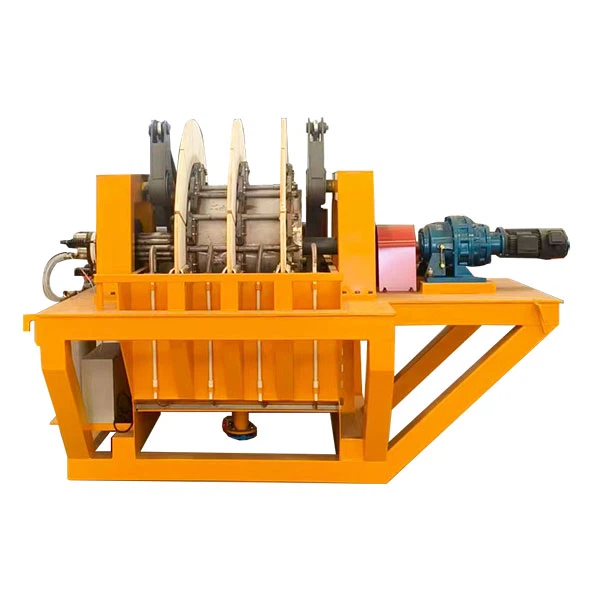

In addition, the presence of dissolved solids in the influent can lead to scaling on the filter discs. Scaling occurs when the dissolved salts precipitate out of the solution and form a hard layer on the surface of the filter media. This can block the pores of the filter media, increasing the pressure drop and reducing the flow rate. To prevent chemical - related issues, it is important to analyze the chemical composition of the influent and select the appropriate filter media and materials for the filter components. In some cases, chemical treatment such as pH adjustment or the addition of anti - scaling agents may be required.
Temperature and Viscosity
Temperature and viscosity are two interrelated factors that can affect the performance of a Rotary Disc Filter. As the temperature of the influent increases, the viscosity of the fluid decreases. Lower viscosity fluids flow more easily through the filter media, resulting in higher flow rates and lower pressure drops. Conversely, higher viscosity fluids can be more difficult to filter, as they require more energy to pass through the filter media.
In cold environments, the viscosity of the influent may increase significantly, causing the fluid to flow more slowly through the filter. This can lead to reduced filtration efficiency and increased pressure drop. To mitigate the effects of temperature and viscosity, the Rotary Disc Filter may need to be equipped with heating or cooling systems to maintain the influent at an optimal temperature. Additionally, the design of the filter should take into account the viscosity of the influent to ensure proper flow distribution and filtration performance.
Biological Activity
Biological activity in the influent can also pose challenges to the performance of a Rotary Disc Filter. Microorganisms such as bacteria, algae, and fungi can grow on the filter media, forming biofilms. Biofilms can reduce the porosity of the filter media, increase the pressure drop, and promote the growth of other harmful microorganisms. In addition, the metabolic by - products of these microorganisms can cause fouling and corrosion of the filter components.
To control biological activity, disinfection methods such as chlorination, ozonation, or ultraviolet (UV) treatment may be employed. These methods can kill or inhibit the growth of microorganisms in the influent before it enters the filter. Regular cleaning and maintenance of the filter are also essential to remove biofilms and prevent their re - growth.
Impact on Efficiency and Maintenance
The quality of the influent directly impacts the efficiency and maintenance requirements of a Rotary Disc Filter. Poor influent quality can lead to reduced filtration efficiency, lower flow rates, and higher pressure drops. This means that the filter may not be able to achieve the desired level of effluent quality, or it may require more energy to operate.
In addition, the increased stress on the filter components due to poor influent quality can lead to more frequent breakdowns and maintenance requirements. Clogged filter discs may need to be replaced more often, and corrosion or fouling of the filter components may require extensive repairs or replacements. This can result in higher operating costs and longer downtime for the filtration system.
Case Studies
To illustrate the impact of influent quality on the performance of a Rotary Disc Filter, let's consider a few case studies. In a wastewater treatment plant, the influent had a high concentration of suspended solids and oils. Without proper pre - treatment, the filter discs quickly became clogged, and the pressure drop across the filter increased significantly. The plant had to shut down the filter for frequent cleaning and replacement of the filter discs, resulting in high operating costs and reduced treatment capacity.
In another case, a mining operation used a Rotary Disc Filter to separate solids from a slurry. The influent had a high concentration of fine particles and a high viscosity due to the presence of certain chemicals. The filter experienced low flow rates and poor filtration efficiency, which affected the overall productivity of the operation. By implementing pre - treatment steps such as flocculation and temperature control, the influent quality was improved, and the performance of the Rotary Disc Filter was significantly enhanced.
Conclusion
In conclusion, the quality of the influent has a profound impact on the performance of a Rotary Disc Filter. Particle size and concentration, chemical composition, temperature and viscosity, and biological activity are all important factors that need to be considered when designing and operating a Rotary Disc Filter. By understanding these factors and taking appropriate pre - treatment and maintenance measures, it is possible to optimize the performance of the filter, improve the effluent quality, and reduce operating costs.
As a supplier of Rotary Disc Filters, we offer a range of solutions to address the challenges posed by different influent qualities. Our filters are designed with high - quality materials and advanced filtration technology to ensure reliable and efficient operation. We also provide comprehensive support services, including influent analysis, pre - treatment system design, and filter maintenance.
If you are interested in learning more about our Rotary Disc Filters or need assistance in selecting the right filtration solution for your application, please feel free to contact us. We are committed to helping you achieve the best possible filtration results. Whether you are dealing with industrial wastewater, mining slurries, or other types of influents, we have the expertise and experience to provide you with a customized solution.
For more information about our related products, you can visit the following links: Rotary Vacuum Disc Filter, Disc Vacuum Filter, and Ceramic Disc Filter.
References
- Metcalf & Eddy, "Wastewater Engineering: Treatment and Resource Recovery", McGraw - Hill, 2014.
- Tchobanoglous, G., Burton, F. L., & Stensel, H. D., "Wastewater Engineering: Treatment, Disposal, and Reuse", Pearson, 2003.
- American Water Works Association, "Water Quality and Treatment: A Handbook of Community Water Supplies", McGraw - Hill, 2017.
