

Hey there! As a supplier of Ceramic Disc Filters, I often get asked a pretty interesting question: Can a ceramic disc filter be used for filtering liquids with high viscosity? Well, let's dive right into this topic and find out.
First off, let's understand what a Ceramic Disc Filter is. A Ceramic Disc Filter is a type of filtration equipment that uses ceramic discs as the filtering medium. These discs have tiny pores that allow the liquid to pass through while trapping solid particles. It's widely used in various industries like mining, chemical, and food processing for separating solids from liquids.
Now, when it comes to high - viscosity liquids, things get a bit tricky. Viscosity is a measure of a fluid's resistance to flow. High - viscosity liquids, like honey, thick oils, or some polymer solutions, flow very slowly compared to low - viscosity liquids like water.
One of the main factors that determine whether a ceramic disc filter can work with high - viscosity liquids is the pore size of the ceramic discs. The pores need to be large enough to allow the high - viscosity liquid to pass through at a reasonable rate. If the pores are too small, the liquid will have a hard time flowing through, and the filtration process will be extremely slow or might even clog the filter.
Another important aspect is the pressure applied during the filtration process. In general, higher pressure can help the high - viscosity liquid to pass through the filter pores. However, there's a limit to how much pressure the ceramic discs can withstand. Excessive pressure can damage the ceramic discs, leading to cracks or breakage, which will compromise the filtration efficiency.
Let's talk about the advantages of using a ceramic disc filter for high - viscosity liquids. One big plus is the high filtration precision. The ceramic discs can effectively remove fine solid particles from the liquid, ensuring a high - quality filtrate. Also, ceramic materials are highly resistant to corrosion, which is a great benefit when dealing with some aggressive high - viscosity chemical solutions.
But there are also some challenges. As I mentioned earlier, the slow flow rate is a major issue. It can significantly reduce the throughput of the filtration process, which might not be ideal for large - scale industrial applications. Additionally, cleaning the ceramic discs after filtering high - viscosity liquids can be more difficult. The sticky nature of the liquid can cause it to adhere to the pores, making it hard to remove completely.
Now, let's compare the Ceramic Disc Filter with other types of filters commonly used for high - viscosity liquids. The Rotary Disc Filter is another option. It works by rotating the discs to continuously expose different parts of the filter medium to the liquid. This can help to improve the flow rate to some extent, especially for high - viscosity liquids. However, it might not offer the same level of filtration precision as a ceramic disc filter.
The Disc Vacuum Filter uses vacuum pressure to draw the liquid through the filter discs. It can be effective for high - viscosity liquids as the vacuum can help to overcome the resistance of the liquid. But similar to the ceramic disc filter, it also has limitations in terms of pressure and potential clogging.
So, can a ceramic disc filter be used for filtering liquids with high viscosity? The answer is yes, but with some caveats. It can work well for certain applications where high - precision filtration is required and the throughput requirements are not extremely high. For example, in some specialty chemical processes or small - scale food production where the quality of the filtrate is of utmost importance.
If you're considering using a ceramic disc filter for high - viscosity liquids in your business, there are a few things you should keep in mind. First, you need to carefully select the appropriate pore size of the ceramic discs based on the viscosity and particle size distribution of your liquid. You might also need to optimize the operating pressure to ensure a good balance between flow rate and filtration efficiency.
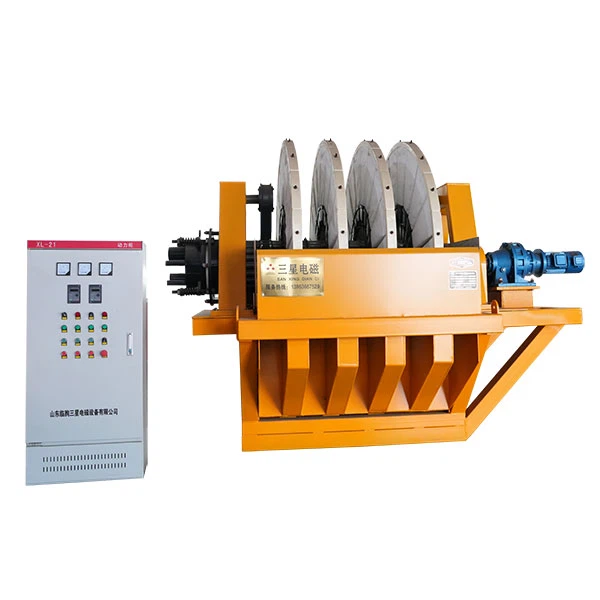

In addition, proper maintenance is crucial. Regular cleaning of the ceramic discs can help to prevent clogging and extend their lifespan. You can use specialized cleaning agents or techniques, such as backwashing or ultrasonic cleaning, depending on the nature of the liquid.
If you're interested in learning more about how a ceramic disc filter can meet your high - viscosity liquid filtration needs, or if you want to discuss potential solutions for your specific application, don't hesitate to reach out. We're here to help you find the best filtration solution for your business. Whether it's choosing the right filter model, optimizing the operating parameters, or providing after - sales support, we've got you covered.
In conclusion, while using a ceramic disc filter for high - viscosity liquids has its challenges, it can be a viable option in many cases. With the right approach and proper maintenance, it can offer high - quality filtration results. So, if you're in the market for a reliable filtration solution, give the ceramic disc filter a serious thought.
References
- Various industry reports on filtration technologies
- Technical literature on ceramic disc filters, rotary disc filters, and disc vacuum filters
