

Hey there! As a supplier of High Frequency Vibrating Screens, I've seen firsthand how crucial it is to understand the impact of material flow rate on the screening process. In this blog, I'm gonna break down what this means, why it matters, and how it can affect the performance of these screens.

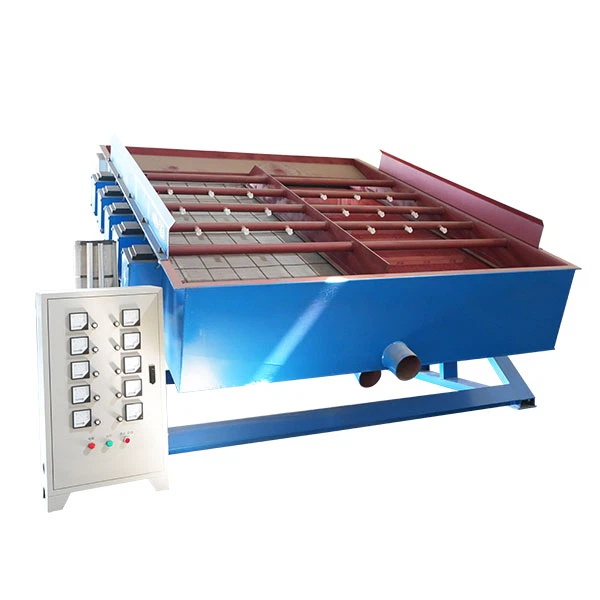
Let's start with the basics. A High Frequency Vibrating Screen, like the ones you can check out High Frequency Vibrating Screen, is designed to separate materials based on their size. It uses high - frequency vibrations to make the particles move through the screen mesh. But the rate at which the material flows onto the screen plays a huge role in how well this separation works.
When the material flow rate is too low, it might seem like a good thing at first. The screen has plenty of time to sort through each particle, and you'd think it would lead to a more accurate separation. However, this can actually cause some problems. For one, the screen might not be fully utilized. The equipment is designed to handle a certain volume of material, and if it's under - fed, you're not getting the most out of your investment. Plus, in some cases, the low flow rate can lead to uneven distribution of the material on the screen surface. This unevenness can cause parts of the screen to wear out faster than others, reducing the overall lifespan of the screen.
On the other hand, when the material flow rate is too high, it's like trying to pour a whole bucket of sand through a small funnel. The screen gets overwhelmed. There's not enough time for the particles to properly pass through the mesh. This leads to a higher percentage of oversized particles in the undersize product, which means the screening efficiency drops significantly. You end up with a product that doesn't meet the desired quality standards. Also, the high flow rate can put a lot of stress on the screen. The vibrations have to work harder to move all that material, which can cause mechanical failures over time.
So, what's the ideal material flow rate? Well, it depends on a few factors. The type of material being screened is a big one. Different materials have different particle sizes, shapes, and densities, which all affect how they move through the screen. For example, a fine powder might flow more easily than a coarse aggregate. The size and design of the screen also play a role. A larger screen can generally handle a higher flow rate than a smaller one. And the configuration of the screen, such as the number of decks and the angle of inclination, can impact the ideal flow rate as well.
To find the right flow rate for your specific application, it's often a matter of trial and error. You might start with a conservative flow rate and gradually increase it while monitoring the screening efficiency. You can use sensors and monitoring systems to keep track of the material flow and the quality of the screened product. This way, you can make adjustments in real - time to optimize the process.
Now, let's talk about how this all relates to different types of vibrating screens. We also offer Small Vibrating Screen and Electromagnetic Vibrating Screen. The principles of material flow rate apply to these screens too, but there are some differences.
Small vibrating screens are great for applications where space is limited or where you need to screen small volumes of material. Since they have a smaller surface area, they can handle a lower material flow rate compared to larger high - frequency vibrating screens. But the importance of getting the flow rate right is just as high. If you overload a small screen, it can quickly lead to clogging and reduced performance.
Electromagnetic vibrating screens use electromagnetic forces to generate vibrations. These screens are often used for more precise screening applications. The material flow rate needs to be carefully controlled to ensure accurate separation. The electromagnetic vibrations are designed to work within a certain range of material volumes, and deviating from this range can affect the screening accuracy.
In the end, understanding the impact of material flow rate on the screening of high - frequency vibrating screens is essential for anyone in the industry. Whether you're a mining company looking to separate minerals, a recycling plant trying to sort waste materials, or a food processing facility screening ingredients, getting the flow rate right can make a huge difference in your bottom line.
If you're in the market for a high - frequency vibrating screen or any of our other screening equipment, and you're struggling to figure out the right material flow rate for your application, don't worry. We're here to help. Our team of experts has years of experience in the field and can provide you with personalized advice and solutions. We can assist you in selecting the right screen for your needs and help you optimize the material flow rate to achieve the best possible screening results.
So, if you're interested in learning more about our products or want to discuss your specific requirements, feel free to reach out. We're always happy to have a chat and see how we can improve your screening process.
References
- Smith, J. (2018). "The Impact of Material Characteristics on Screening Efficiency". Journal of Industrial Screening.
- Johnson, R. (2019). "Optimizing Material Flow in Vibrating Screens". Mining and Processing Review.
- Brown, A. (2020). "Electromagnetic Vibrating Screens: Design and Operation". Engineering Innovations Journal.
